



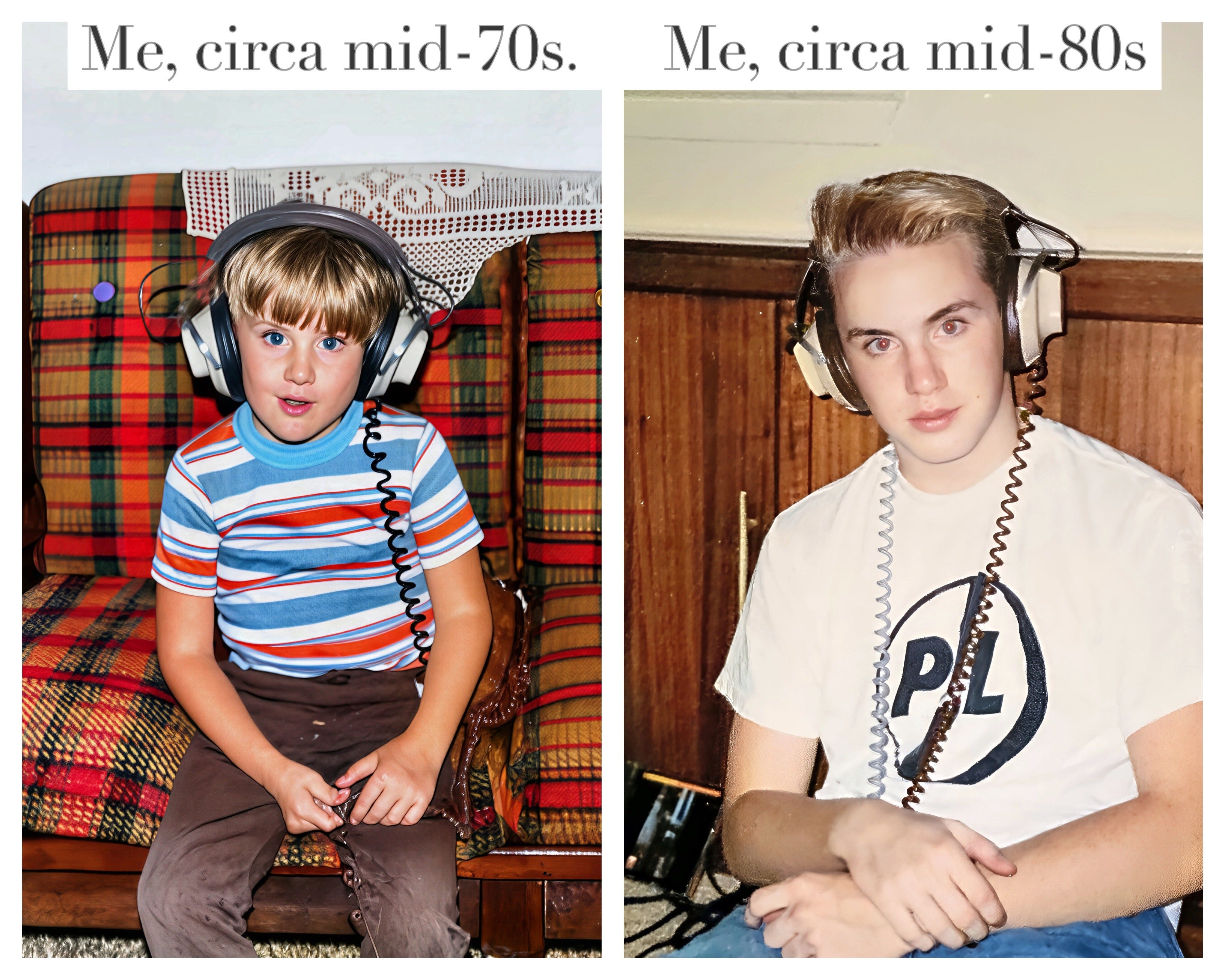
As you can tell, I’ve been a music nerd for a long time.
I started Reference Checks because nobody was solving the audiophile problem I kept running into. An album release gets praised everywhere. You buy a copy. The version you got is not the one anyone was talking about. Different lacquer, different cut, different plant, different decade. Same catalog number on the spine.
I built this to close that gap.
A great album is never one object. It is a sequence: the studio, the engineer, the master tape, the lacquer cutter, the plant, the digital transfer. 40 years later someone reissues it and the chain forks again. The US gets one cut, the UK gets another. A first pressing comes back noisy and a second cut gets made. The digital edition is pulled from a different master than the vinyl. Each fork changes what reaches your speakers, your DAC, your headphones. Most listeners never see those forks. I read them and tell you which copy is worth your money.
I do not review gear. My system is listed at the bottom of this page for context, and it stays out of every verdict.
What each post promises
Discovery and verdict. One recording I want you to hear. One format and one copy that gets the recording right.
The verdict is format-specific: vinyl, CD, hi-res digital download or stream, or tape. Whichever format does the recording justice gets the verdict, and sometimes two do. It arrives with the detail you need to find that copy: master engineer, cutter, plant, catalog number, matrix. The verdict gives a durable answer if your system is already built, and tells you what to look for if you are still building one.
I recommend the version that best carries the recording, judged on provenance, mastering chain and measurement. Where an artist made or endorsed a different version and that preference still stands, I name it, say what it costs against the pick, and leave the choice to you.
The standard
The bar here is high. It has to be, or the verdicts are just opinions in a nice frame.
Every record I want to write about gets run through the Pressing Council, a research framework I built specifically for this work. The Council tracks the chain at every fork, weighs the evidence link by link, and most of the time it tells me to put the record back. Sometimes a new reissue comes out a few years later and changes the math. Sometimes a pressing sits forever.
The filter is the whole point. If I don’t have something that clears it, I don’t publish.
How a verdict gets checked
Every edition clears a published set of gates before it reaches you, and some of them clear before it reaches anyone outside the publication at all. The gate that does the most work: any claim naming a specific person on a specific track needs 2 independent primary sources before it reaches narrative drafting, and every descriptive clause attached to a named person counts as a claim. Verified or cut. Prices trace to a live lookup at the time of publish, never to what a platform usually charges.
Where the relationship allows, the album’s producer or a named session musician reads a private preview before publish. It runs last, against work the gates have already cleared. The first edition caught a misattribution that way.
The full method is on the Editorial process page, including how a thin evidence chain gets labeled instead of smoothed over.
When something turns out wrong, it gets fixed in the edition and logged on the Corrections page with the date and whoever caught it. Corrections are public and they stay public.
Reference Checks takes no commission and no payment on any buy recommendation. There are no affiliate links here and there will not be.
Why the chain gets documented
Between 2007 and 2022, Mobile Fidelity sold records under the Original Master Recording and One-Step names, and buyers took those to mean the sound came off the tape and stayed analog the whole way. A digital step sat in the middle of that chain for fifteen years. The company settled a class action over it, with roughly 40,000 customers projected as affected and estimates of the total running past $25 million.
The part worth sitting with is who found it. A record store owner named Mike Esposito put it on YouTube. Every audio publication had the same access to the same people. None of them had asked.
I do not think that happened because anyone was dishonest. It happened because a label’s account of its own chain gets treated as the chain, and almost nobody checks. That is the assumption this publication exists to stop relying on. Every verdict here names the engineer, the cutter, the plant, and the source, and where the chain is thin it gets labeled thin instead of smoothed over.
Who it is for
Serious listeners. Audiophiles, collectors, working musicians, engineers, producers, archivists and curious readers who take recordings seriously and do not need to be told why source and technical craft matter.
My main reader is the serious listener who loves a record enough to want the best copy of it. Industry pros find the work credible too, and that crossover is welcome. Treating the recording seriously turns out to be the same thing as treating the people who made it seriously. Same job.
What does not appear here
No gear reviews. I do not run brand comparisons, cable shootouts or any content that turns the listening chain into the subject.
My offering here is the verdict, and a verdict shows its work. The criteria are fixed and the evidence is open to audit on the pages linked above. If I share an opinion that is not a verdict, I label it in the notes or mark it as an editorial decision.
About the writer
I am Craig Jenest, a senior entertainment executive and Emmy-nominated producer with 20+ years across Disney, MTV, A&E, Fox Sports and Five Films, which I co-founded. On the personal side, I have been a performer in a professional capacity from the time I was in 5th grade until I made the pivot into production about 5 years after graduating from UNT’s College of Music. I am also a serious listener who got tired of guessing which version of a recording to buy. I built the Pressing Council to stop guessing, and Reference Checks is where I publish the verdicts. It runs as a Twelve Bar Studio production. No label, retailer, equipment manufacturer or reissue program funds or influences this work.
The chain I listen on is named here for transparency and absent from every verdict: Rega P3 RS turntable with Nd7 cartridge, Rega Aria MK3 phono preamp, Violectric V281 headphone amplifier, Dan Clark Audio Stealth and Audeze LCD-4z headphones, Focal Solo6 Be monitors with Sub6 subwoofer, Eversolo DMP-A10 streamer and DAC, Shanling ET3 CD transport, Roon and Qobuz for streaming.
Editorial: craig@twelvebar.studio
Cadence
Editions drop on Tuesday mornings, weekly or every other week depending on what the research supports.
An empty slot beats a soft verdict. I would rather hold an edition and tell you why than publish one that has not earned it.
The paid tier
The story, the verdict and the technical basis stay free on every post. That does not change when the paid tier opens.
Paid adds the full decision memo, including the gray-zone calls and the pressings that were disqualified along the way; a subscriber-request lane for assessments; and a quarterly long-form video tied to a specific edition, with a mastering engineer, label representative, recording engineer, archivist or band member.
Subscribe
The button below subscribes you. Free covers the story, the verdict and the technical basis on every post. Paid, when it opens, adds the stack above.
