



Edition №13
The only Talk Talk I owned, from college until this year, was a 12-inch remix of "It's My Life." I knew the music long before that. When I was a teenager in north Dallas a group of us went to a teen club called Jams that played music videos, all of us too young to drive. We maximized the whole thing of “my parents could drop us off if your parents could pick us up”. "It's My Life" was in rotation the entire time we went. Every time I hear Mark Hollis's voice I stop to listen. I heard The Colour of Spring back then too, and I can't say why it didn't stick. What I heard in that era was a classic simplicity, and I never went further than hearing it. They are a band I wish I had paid more attention to while they were still making music.
The simplicity is what the method and music-making left standing.
Hollis said in 1986 that there was a conscious effort on the album to use cheap sounds, so as to sonically stress the playing. That is the part almost nobody writes about, and it runs deeper than the sounds. Hollis said he did not consider all the various players on it as “session musicians”. They were all working musician, some in other bands. They were allowed to come in and play freely, and he and Friese-Greene selected what they liked inside the booth. Hollis said he liked working with people because they add rather than take away.
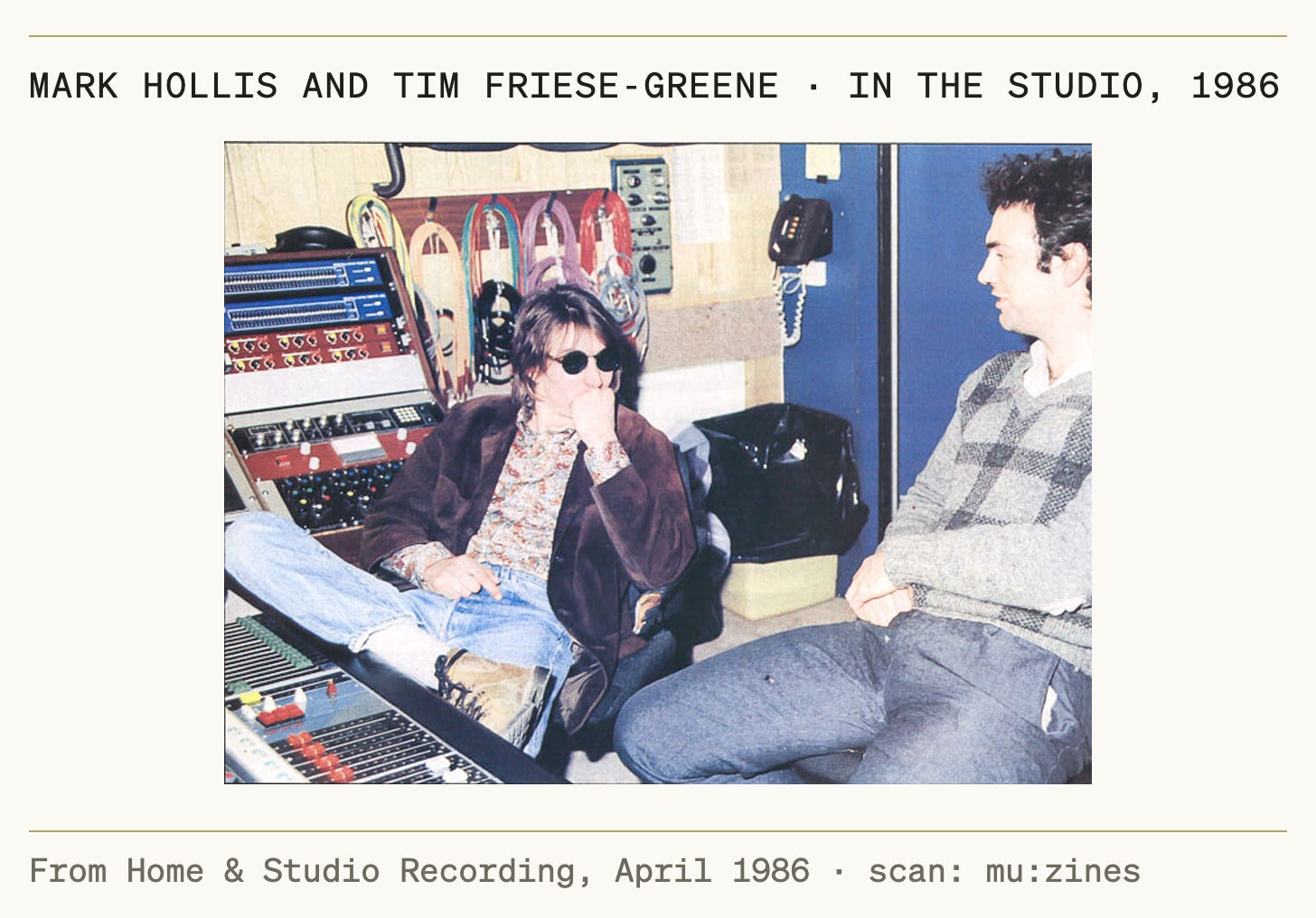
So the record was cast in those sessions, and then it was filtered.
The album was cut 4 times in 1986, in 4 countries, and this edition ranks all 4 as equals. Each one sits one generation from the tape that caught all that playing, which is what decides how much of it you get. A half-speed pressing reached shops this month and does not say where its master source.
The short answer
The 4 cuts of 1986 are co-equal on a single test, and that test is the reason to buy any of them: first-generation analog, lacquer or DMM, from the same master, with no digital step. Nothing at any evidence tier separates them, so region, condition, and price decide it.
Best overall on vinyl is any of the 4 original 1986 cuts: Nick Webb's UK lacquer, Wally Traugott's US lacquer, the Dutch DMM, or Don Mills's Canadian lacquer. They start at $12.52, and the Dutch DMM is both the least expensive of the four and the easiest to find. Buy the cleanest copy your region gives you.
Best overall on CD and digital is the 1986 first CD, a flat transfer of the same analog master with no named engineer, pressed at 6 co-equal plants. It starts at $8.62, which makes it the least expensive object in this verdict.
The Reference Buy List has the pick for every record I've researched.
That is the pick. A free subscription opens everything behind it: the best copy by format, the near-peers and the cautions, the catches, the chain from the session tape to your copy, and the people in the room when it was made.
Reference Checks is a Twelve Bar Studio production. If you've ever bought a record everyone praised and wondered why yours didn't sound like the one they meant, that's the problem I started it to solve. If there's a record you've never been sure which copy to buy, reply and name it. Every title gets logged and the list helps decide what gets researched next. My listening chain is calibration context, named in the About page and kept out of every verdict. Research uses AI tooling; the verification and the editorial are mine. See Editorial process.