


Edition №6
Bill Evans is a performer I never tire of listening to. Half the pleasure is the discography itself: the with-strings records, the overdubbed solo experiments, the duets, the trios he kept rebuilding for twenty years. He was a talented and complicated man, and the records carry both sides.
Portrait In Jazz is the first full statement of the most consequential of those trios, and it kept a secret for sixty-six years. By the end of 1959 Evans had already played on Kind of Blue and was climbing the DownBeat polls, and he was still reluctant about his own career. He let two years pass between his first and second albums because, he insisted, he didn’t have anything particularly different to say. His producer, Orrin Keepnews, put it more plainly: for a while it looked as if just about the only person who didn’t dig Bill Evans was Bill Evans.
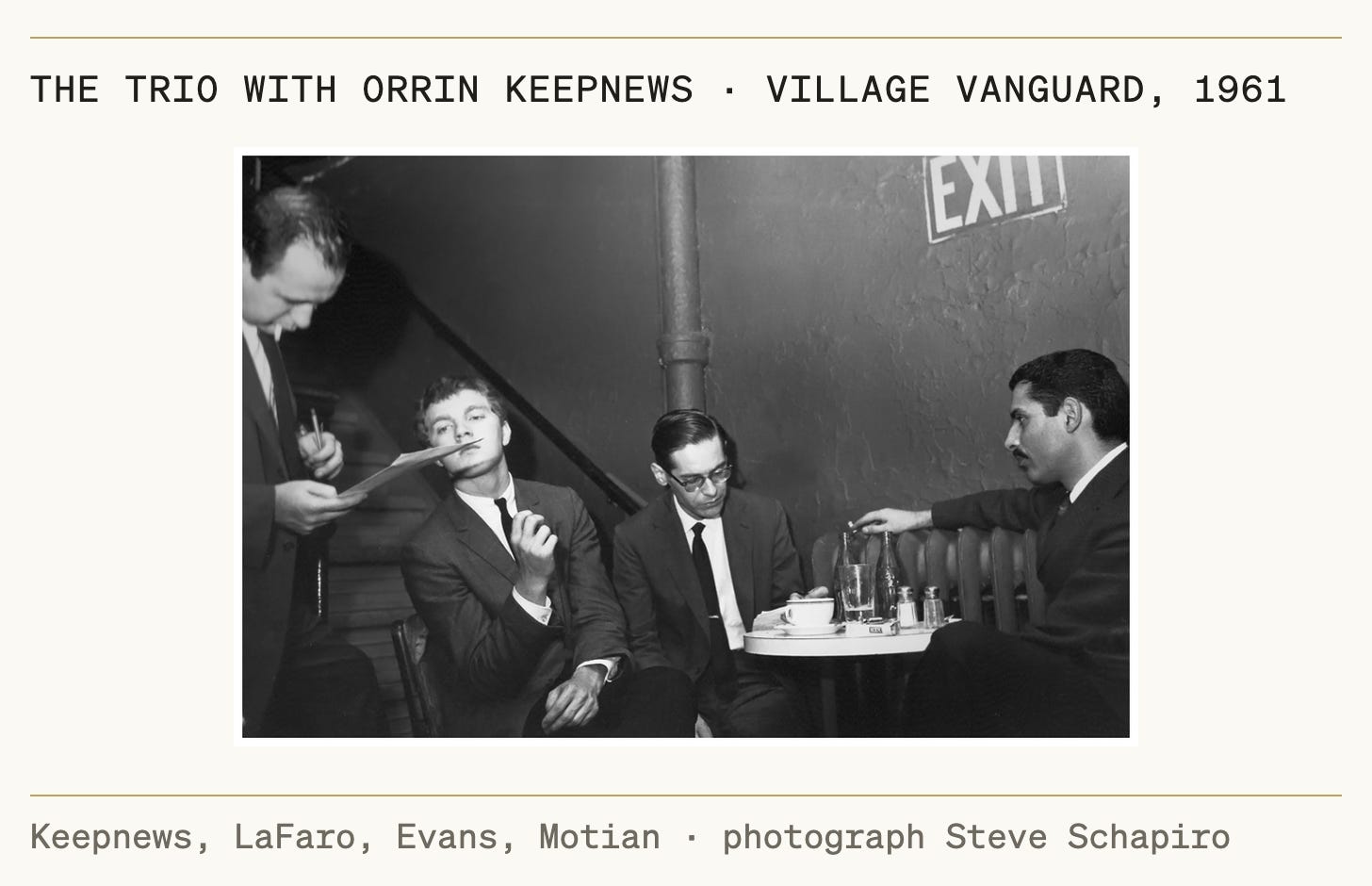
What changed was the band. Working opposite Benny Goodman at Basin Street East, Evans lost one trio and assembled another: Scott LaFaro, a bassist expanding what the instrument could do inside a band, and Paul Motian, a drummer who listened as much as he played. On December 28, 1959, about five weeks into the trio’s life by Evans’s own count, Keepnews brought the three of them into Reeves Sound Studios in New York, and they recorded the whole album in a day.
Here is the secret. That day the trio played Autumn Leaves over and over; Craft’s 2025 tape research counted at least thirteen takes. Two different performances reached the public, and for sixty-six years the object you bought decided which one you owned. Most listeners never knew there was a choice.
The reissues have multiplied since: original mono and stereo pressings, audiophile cuts from three boutique houses, a Japanese disc collectors chase, downloads off a later master. The differences start with which Autumn Leaves is actually in the grooves. The work is knowing what each object holds, and which one holds the recording best.
The short answer
The right version of this record starts at $8.79.
Best overall on vinyl is the Analogue Productions Kevin Gray and Steve Hoffman cut, all-analog from the original tapes. The standalone pressings are out of print, with recent sales running about $45 to $2000; the same master is in print inside the Riverside Recordings box at $900, which works out to about $41 dollars per title.
Best overall on CD and digital is the JVC XRCD mastered by Alan Yoshida, out of print, with recent sales from about twenty-five to one hundred thirty dollars and most copies changing hands near fifty.
The Reference Buy List has the pick for every record I've researched.
That is the pick. A free subscription opens everything behind it: the best copy by format, the near-peers and the cautions, the catches, the chain from the session tape to your copy, and the people in the room when it was made.
Reference Checks is a Twelve Bar Studio production. If you've ever bought a record everyone praised and wondered why yours didn't sound like the one they meant, that's the problem I started it to solve. If there's a record you've never been sure which copy to buy, reply and name it. Every title gets logged and the list helps decide what gets researched next. My listening chain is calibration context, named in the About page and kept out of every verdict. Research uses AI tooling; the verification and the editorial are mine. See Editorial process.